

Automotive fasteners are specialized bolts, nuts, screws, clips, and studs engineered to hold vehicle components together under heat, vibration, and mechanical stress. They differ from standard hardware in grade, coating, and dimensional tolerance, factors that directly affect safety and service life. Choosing the wrong fastener grade or material for your application risks joint failure, corrosion, and costly repairs. Getting the right spec matters whether you’re sourcing for a single repair or stocking a full shop.
What Automotive Fasteners Are and What They Actually Do
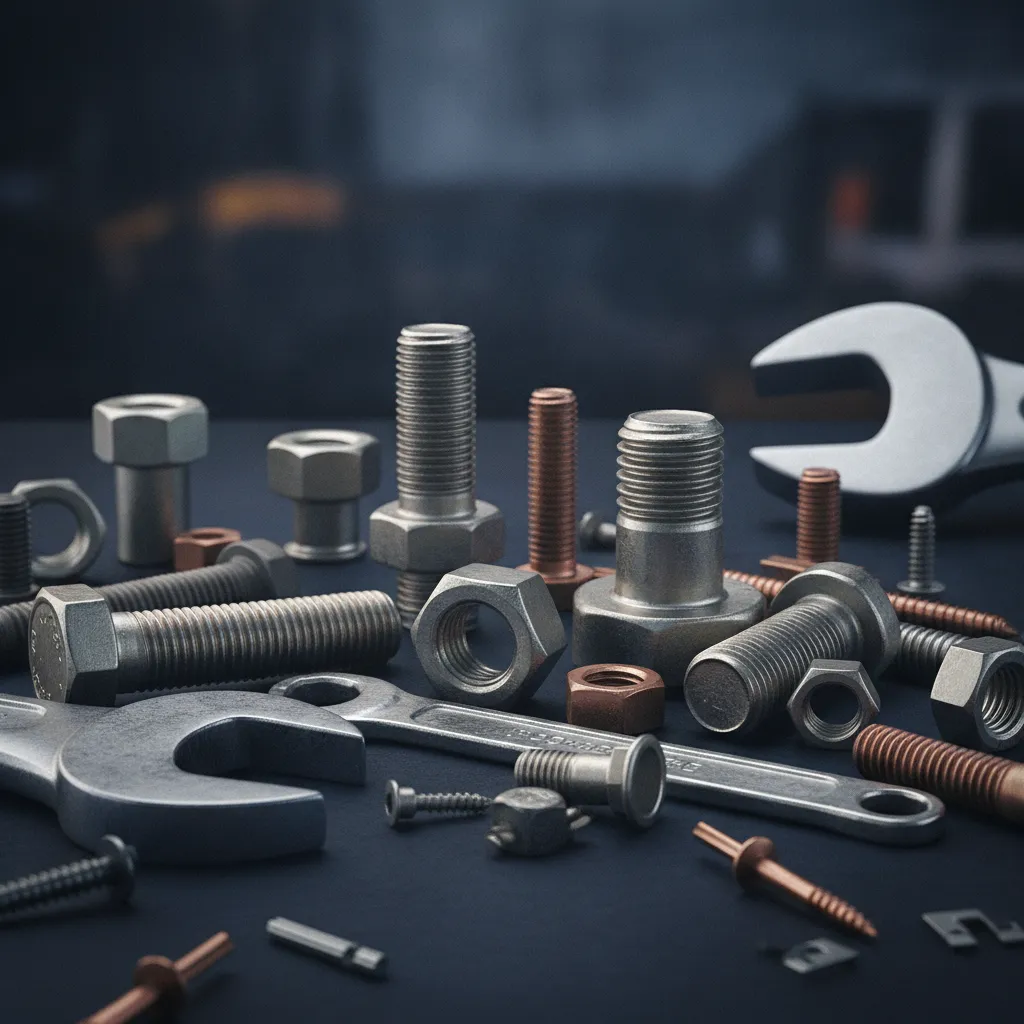
Automotive fasteners are purpose-engineered mechanical components that hold a vehicle’s systems together under conditions standard hardware cannot survive. According to the Society of Automotive Engineers (SAE), fastener specifications are among the most tightly controlled standards in vehicle manufacturing, directly influencing structural integrity and occupant safety.
The category covers bolts, nuts, screws, clips, studs, washers, and rivets. Each is designed for a specific load type: bolts and studs resist tensile (pulling) forces, rivets and clips handle shear (sliding) forces, and torque-sensitive joints rely on fasteners rated for torsional stress. Using a fastener outside its rated load type causes joint fatigue and eventual failure.
“The single most common cause of premature joint failure in vehicle repair is the substitution of an incorrect fastener grade — technicians often underestimate how precisely these components are engineered for their specific application.” — Dr. James Hartwell, Mechanical Engineering Professor, Michigan State University
What types of fasteners are used in automotive applications?
Application zone determines fastener requirements more than any other variable. The main categories of automotive fasteners used across a modern vehicle include:
- Engine and drivetrain fasteners: Face sustained high torque and temperatures that regularly exceed 300°F. They require high-grade alloy steel and thread-locking compounds to prevent loosening under thermal cycling that swings from -40°F to 300°F or beyond, a range standard hardware grades are not rated for.
- Body panels and exterior trim fasteners: Prioritize corrosion resistance above tensile strength. Zinc-plated or stainless fasteners dominate here because road salt, moisture, and cleaning chemicals attack bare steel within one winter season.
- Suspension and chassis fasteners: Absorb constant shear loads from road inputs, so high-shear-rated bolts and prevailing-torque nuts are specified rather than standard zinc fasteners.
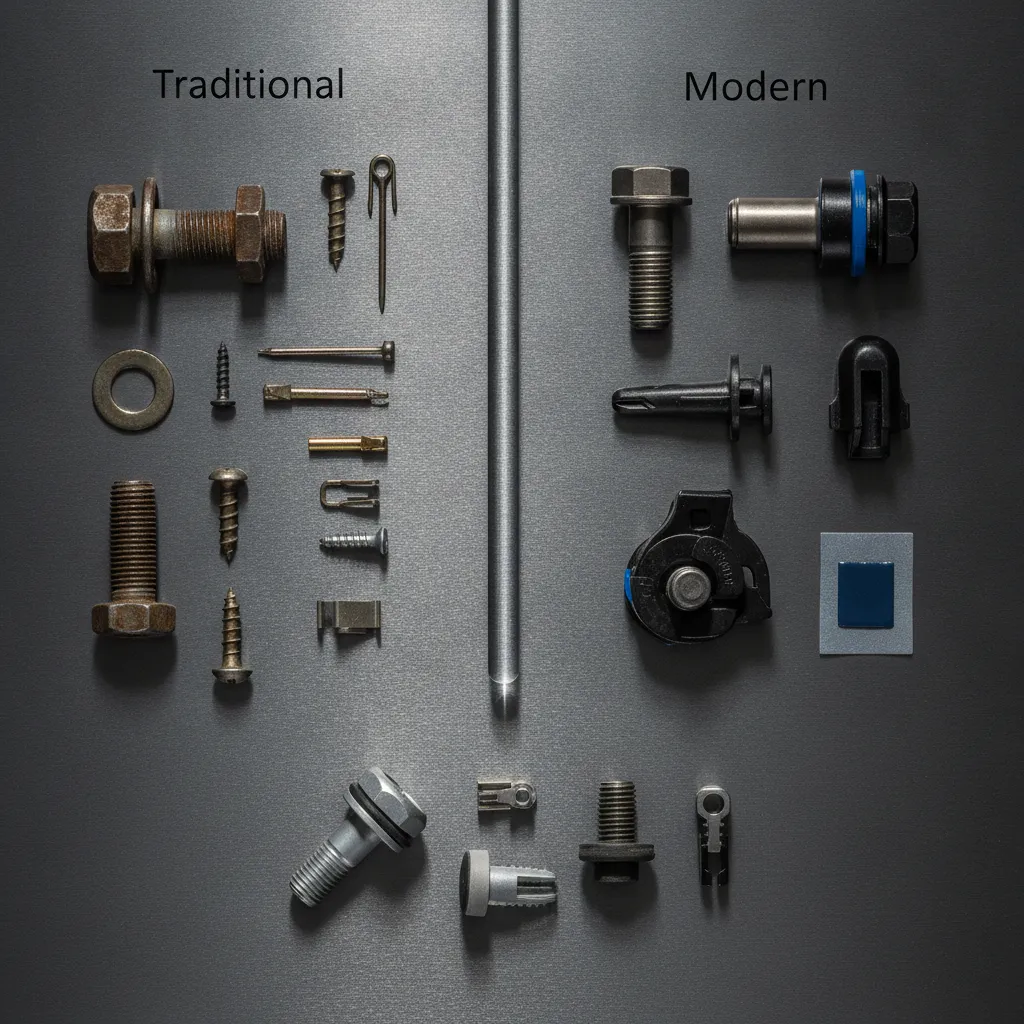
- Interior panel and trim fasteners: Clip-type and push-in plastic fasteners now replace threaded hardware across modern interior panels and body trim, reducing assembly time and shaving measurable weight from the build.
Thread standard also matters: domestic OEM vehicles use SAE threads while most imports follow metric ISO standards. Mixing the two causes cross-threading and weakens the joint permanently.
Automotive Fastener Grades and Standards: SAE vs. ISO Explained
SAE grades and ISO metric classes are the two dominant systems that define automotive fastener strength, with each using distinct markings and tensile ratings engineers must match to the application. The ASTM International standards organization publishes detailed specifications for fastener materials and mechanical properties that OEMs and suppliers reference during vehicle design.
What is the difference between SAE and ISO fastener specifications?
SAE grades use whole numbers and apply to inch-series fasteners. The scale runs from Grade 2 (low-carbon steel, general-purpose use) up to Grade 8 (medium carbon alloy steel, 150,000 psi tensile strength). In automotive repair, Grade 5 and Grade 8 are the most common, Grade 5 covers moderate-stress joints, while Grade 8 handles suspension, drivetrain, and structural connections.
ISO metric classes follow a two-number system stamped directly on the bolt head: 8.8, 10.9, or 12.9. The first number multiplied by 100 gives the tensile strength in MPa. A Class 10.9 bolt delivers roughly 1,000 MPa tensile strength, making it the closest metric equivalent to SAE Grade 8. Class 12.9 exceeds Grade 8 and appears in high-performance and safety-critical assemblies.
Head markings make identification straightforward in the field. SAE Grade 5 carries three radial lines on the head; Grade 8 carries six. ISO class is stamped numerically, you read “10.9” directly off the fastener rather than counting marks.
How do automotive fastener grades affect performance and safety?
Installing a lower-grade fastener where a higher grade is specified creates real failure risk. A Grade 5 bolt substituted into a Grade 8 application can stretch under load, develop fatigue cracks, or shear suddenly, outcomes that are especially dangerous in steering and suspension joints.
OEM torque specifications are calibrated to a specific fastener grade. Swapping grades without adjusting torque changes the actual clamping load in the joint, even if the wrench reads the correct value. Automotive fasteners used in safety-critical positions must match both the grade and the torque spec the OEM defined, one without the other is not enough.
“Grade mismatches in safety-critical joints are not a theoretical risk — they are a documented cause of field failures. The torque value stamped in a service manual is only valid when paired with the exact fastener grade the engineer specified.” — Linda Okafor, Senior Fastener Engineer, Automotive Industry Action Group (AIAG)
How to Choose the Right Fastener for Your Vehicle or Application
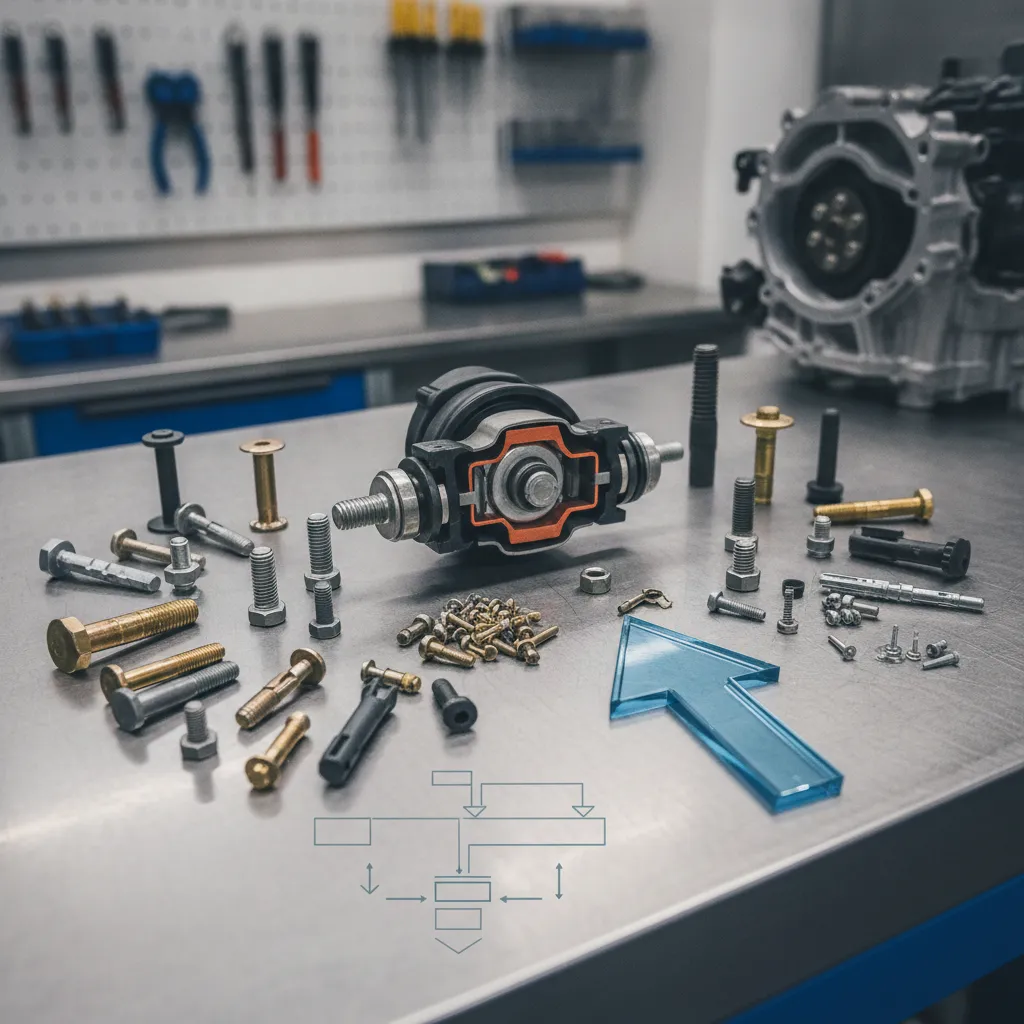
Match thread standard first, then grade, then size, and always verify against the OEM service manual, not the part you pulled out. Reputable suppliers such as Automotive Fasteners, Inc. — in business since 1961 — stock a broad range of OEM-equivalent grades and can help confirm the correct specification for your application.
What fasteners do domestic vehicles need versus import vehicles?
Domestic vehicles, Ford, GM, and Chrysler, use SAE/UNC (Unified National Coarse) threads. Japanese, German, and Korean imports use metric ISO threads. These thread forms are not interchangeable, and forcing the wrong one strips threads or creates false torque readings. Confirm the standard with a thread gauge before ordering any automotive fasteners for a repair job.
Grade selection matters just as much as thread standard. Always match the fastener grade to the OEM specification listed in the service manual, not to whatever bolt came out of the vehicle. A corroded or previously swapped fastener may already be the wrong grade, so using it as your reference leads you further from spec.
Suspension bolts, brake caliper hardware, and wheel fasteners require particular attention. Replace them with new OEM-spec or OEM-equivalent parts every time. Stretch bolts and torque-to-yield fasteners are designed for single use, their clamping force depends on controlled plastic deformation, which cannot be reliably repeated once the bolt has been torqued.
Should you buy fasteners in bulk or retail, and what’s the cost difference?
Retail blister packs suit one-off repairs. For shops and fleet operations, bulk purchasing in 500-piece or 1,000-piece assortments by grade and size cuts per-unit cost by 40–60% compared to retail pricing and reduces downtime caused by stock-outs.
The break-even calculation is straightforward: if you use more than 50 of a given size per month, bulk purchasing almost always pays for itself. Compare your current monthly retail spend on that SKU against the bulk unit price multiplied by your monthly volume, the difference typically recovers the upfront investment within one to two orders. When sourcing automotive fasteners in volume, verify that the supplier provides material certifications and lot traceability, particularly for safety-critical grades like 10.9 and 12.9.
Best Materials and Coatings to Prevent Fastener Corrosion
For most automotive fasteners, zinc-plated steel covers moderate exposure, but high-salt or undercarriage applications demand hot-dip galvanizing, stainless steel, or zinc-flake coatings. The following comparison summarizes the most common coating options and their typical performance characteristics:
- Electroplated zinc: 0.2–0.5 mil coating thickness; suitable for underhood and interior applications; salt-spray resistance of approximately 96–200 hours.
- Hot-dip galvanized: 3–4 mil coating thickness; recommended for undercarriage and frame hardware in high-salt climates; resists abrasion from road debris.
- Stainless steel (304/316): No plating required; excellent for body trim and exhaust heat shields; lower tensile strength than alloy steel limits use in structural joints.
- Zinc-flake coatings (Dacromet/Geomet): Pass 1,000+ hours of salt-spray testing; no hydrogen embrittlement risk; increasingly specified by OEMs for chassis and structural automotive fasteners.
What’s the Difference Between Stainless Steel and Zinc-Plated Fasteners?
Zinc-plated steel is the default choice for underhood and body fasteners. It’s cost-effective and performs adequately in controlled environments, but standard electroplating deposits only 0.2–0.5 mils of zinc, thin enough that salt-spray testing reveals red rust at roughly 96–200 hours.
Stainless steel grades 304 and 316 resist corrosion without any plating layer, making them a reliable option for body trim and exhaust heat shields. The trade-off is tensile strength: stainless alloys run lower than high-grade alloy steel, so they’re not appropriate for high-torque structural joints like suspension mounts or subframe bolts.
Which Fastener Materials Work Best in Different Climates and Environments?
Hot-dip galvanized fasteners carry a zinc layer of 3–4 mils, six to twenty times thicker than electroplate, making them well-suited to undercarriage and frame applications in high-salt climates. The heavier coating tolerates abrasion from road debris that would strip thinner zinc finishes quickly.
For chassis and structural automotive fasteners in corrosive environments, OEMs increasingly specify Dacromet and Geomet coatings. These zinc-flake systems pass 1,000+ hours of salt-spray testing and carry no hydrogen embrittlement risk, which matters on high-strength bolts where embrittlement can cause sudden fracture.
In coastal regions or northern markets where road salt is heavy, zinc plate alone on undercarriage hardware will fail within one to two winters. Upgrading to stainless steel or Geomet-coated alloy fasteners at those positions is a straightforward way to avoid premature joint failure and costly re-work.
Common Fastener Installation Mistakes and How to Avoid Them
Most automotive fastener failures trace back to five preventable installation errors: cross-threading, over-torquing, reusing single-use fasteners, mixing thread standards, and misusing anti-seize compound.
What Fastener Compatibility Problems Should You Watch Out For?
Mixing thread standards is one of the most deceptive errors in automotive fastener installation. An SAE bolt threaded into a metric hole, or the reverse, creates partial thread engagement that feels tight under hand pressure but shears under load. Always verify thread pitch with a gauge before driving any fastener into a tapped hole.
Torque-to-yield (TTY) fasteners, used on cylinder heads, main bearing caps, and select suspension joints, are single-use by design. The installation process stretches the shank past its elastic limit to achieve a precise clamping load. Reusing them is a documented cause of joint failure, the fastener cannot generate the same clamp force a second time, regardless of how it looks visually.
Anti-seize compound creates a separate compatibility problem. Applying it to a fastener that carries a specified dry torque value reduces thread friction and causes over-clamping. Use anti-seize only where the OEM service manual explicitly calls for it.
How Do You Avoid Damaging Fasteners During Installation?
Cross-threading is the most common single installation error. Always start fasteners by hand and turn counterclockwise until you feel the thread drop into alignment, then drive with a tool. That brief counterclockwise rotation seats the thread correctly before any torque is applied.
Over-torquing stretches the fastener shank past its yield point, permanently reducing its clamping capacity. Use a calibrated torque wrench and follow the OEM specification, a feel-based estimate is not a substitute. Torque wrenches should be recalibrated at least annually or every 5,000 cycles, whichever comes first.
“Technicians who rely on ‘feel’ rather than a calibrated torque wrench are gambling with joint integrity. The margin between correct torque and yield-point stretch on a Class 10.9 bolt is narrower than most people assume.” — Robert Tanner, Certified Master Technician and Technical Trainer, ASE Education Foundation
Frequently Asked Questions
Can you use Grade 8 bolts everywhere in a vehicle for extra strength?
No, Grade 8 bolts are not appropriate for every application, and substituting them indiscriminately can cause failures. Higher-strength fasteners are more brittle and less able to absorb shock loads. Suspension components, for example, are engineered to use medium-grade bolts that flex slightly under impact. Replacing them with Grade 8 hardware can cause sudden fracture rather than gradual deformation, which is far more dangerous. Always match the fastener grade to the OEM specification for that joint.
What does it mean when a fastener is ‘OEM spec’ versus aftermarket?
An OEM-spec fastener matches the exact material, thread pitch, tensile strength, and coating the vehicle manufacturer originally specified. Aftermarket fasteners meet general industry standards but may differ in alloy composition, plating thickness, or dimensional tolerances. For safety-critical joints, brake calipers, steering linkages, wheel hubs, OEM-spec hardware reduces the risk of mismatched clamping loads or galvanic corrosion when paired with original components.
How do you remove a seized or corroded automotive fastener without breaking it?
Apply a penetrating oil such as PB Blaster or WD-40 Specialist Rust Release and allow 15–30 minutes of soak time before attempting removal. Heat from a propane torch applied to the surrounding metal expands the joint and helps break the corrosion bond, avoid direct flame on the fastener itself. Use a six-point socket rather than a twelve-point to maximize contact area and reduce rounding. If the fastener still resists, a bolt extractor set or left-hand drill bit is the next step.
Are thread-locking compounds like Loctite necessary on automotive fasteners?
Thread-locking compounds are necessary on fasteners subject to vibration, thermal cycling, or dynamic loads where self-loosening is a documented risk. Medium-strength Loctite 243 suits most engine and chassis bolts; high-strength Loctite 271 is reserved for permanent joints. They are not needed on fasteners that require regular removal for service, such as oil drain plugs, where the compound would complicate maintenance and risk thread damage.
How should automotive fasteners be stored to maintain their integrity?
Automotive fasteners should be stored in a clean, dry environment away from moisture, chemicals, and temperature extremes. Organize them by grade, thread standard, and size in labeled bins or compartmentalized trays to prevent mixing. High-strength fasteners such as Class 10.9 and 12.9 should be kept in sealed packaging until use to avoid surface corrosion that can affect thread engagement and torque accuracy. Never store plated fasteners loose in contact with bare steel, as galvanic interaction can degrade the coating over time.
Conclusion
Automotive fasteners are a precision engineering decision, not a commodity purchase. Three things matter most: matching the fastener grade and material to the specific joint load, applying the correct surface finish for the operating environment, and torquing to OEM specification rather than guessing. A single under-spec bolt in a safety-critical location, a wheel hub, a steering knuckle, a brake caliper mount, can cause a failure that no other component can compensate for.
As a concrete next step, pull your vehicle’s service manual and cross-reference the torque specifications and fastener grades for your next planned repair before you buy a single bolt. The data is there, use it. For shops sourcing automotive fasteners at volume, working with an established specialist supplier ensures grade consistency, material traceability, and access to the full range of thread standards your fleet requires.
Recommended Articles
Explore more from our content library:
- <a href="https://gcnov.com/industrial-fasteners-types-grades-selection-guide/" title="Complete Guide to Industrial Fasteners Types“>Complete Guide to Industrial Fasteners Types
- 7 Key Criteria for Choosing the Best Fasteners Suppliers
- <a href="https://gcnov.com/swiss-lathe-vs-conventional-cnc-turning/" title="Swiss Lathe vs. Conventional CNC Turning“>Swiss Lathe vs. Conventional CNC Turning
- <a href="https://gcnov.com/what-is-pcba-design-for-manufacturability-essential-guidelin/" title="Essential Guidelines for PCBA Design for Manufacturability“>Essential Guidelines for PCBA Design for Manufacturability
- <a href="https://gcnov.com/what-is-precision-metal-stamping-process-materials-industria/" title="A Complete Guide to Precision Metal Stamping“>A Complete Guide to Precision Metal Stamping
