

Custom CNC machining is a subtractive manufacturing process where computer-controlled cutting tools remove material from a solid block to produce precision parts from your exact design files. Lead times typically run 2–7 business days depending on complexity and provider, with tolerances as tight as ±0.005″. It serves industries from aerospace to consumer electronics, handling metals, plastics, and composites at both prototype and production volumes.
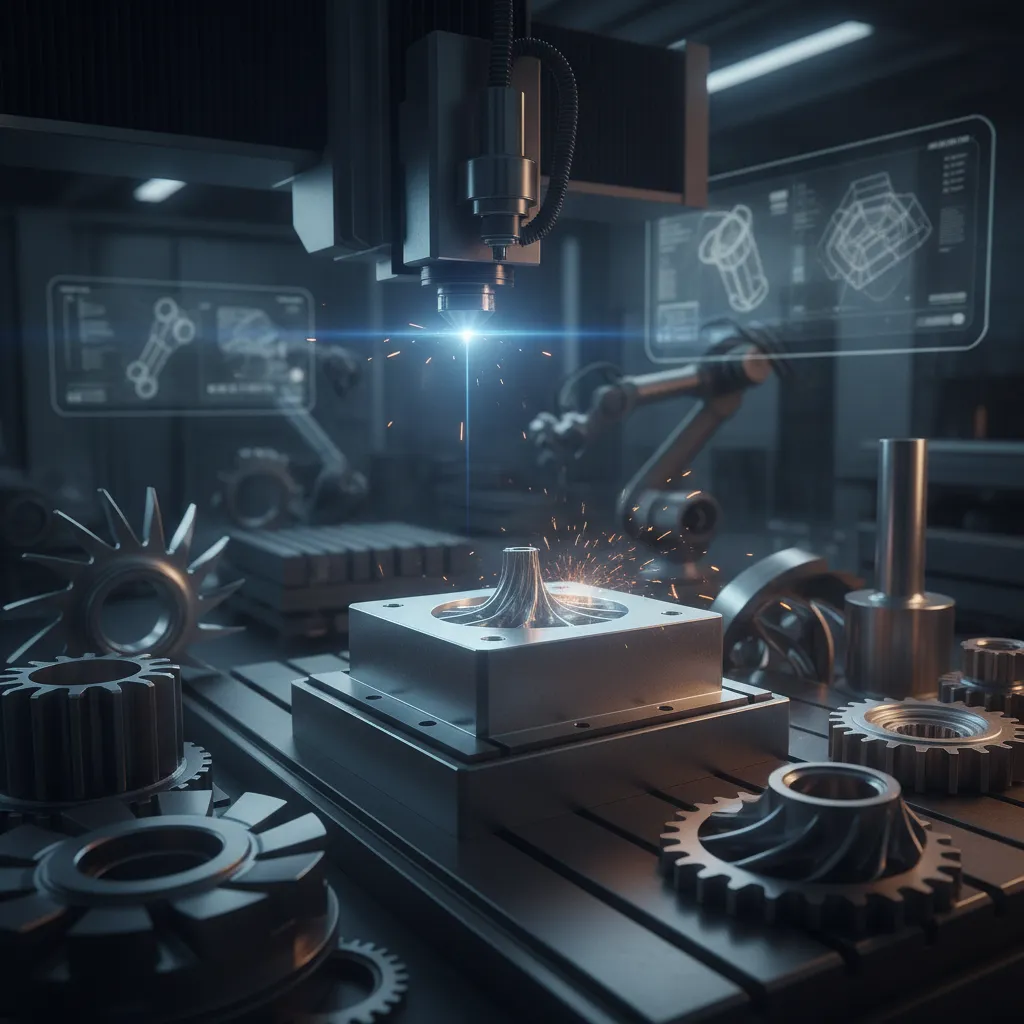
Understand What Custom CNC Machining Can Do for Your Project
Custom CNC machining removes material from solid stock using computer-controlled tools across four core processes: milling, turning, drilling, and EDM.
Each process suits different part geometries. Milling cuts flat surfaces, pockets, and contours. Turning produces cylindrical parts on a lathe. Drilling creates precise holes at controlled depths. EDM (electrical discharge machining) erodes hard metals where conventional cutting tools cannot reach—useful for hardened steel dies and tight internal corners.
“CNC machining remains the gold standard for precision part production because it combines geometric flexibility with material versatility that no other subtractive process can match at prototype and mid-volume scales.” — Dr. David Dornfeld, Professor of Manufacturing Engineering, University of California Berkeley
Key CNC Machining Processes and Capabilities
The axis count of a machine determines what geometries it can cut in a single setup. A 3-axis machine moves along X, Y, and Z, enough for most prismatic parts. A 5-axis machine also rotates the part or spindle on two additional axes, allowing complex undercuts, angled holes, and organic surfaces without repositioning. That repositioning step is where tolerance error accumulates, so 5-axis work is both more capable and more accurate for complex parts.
Compared to 3D printing, custom CNC machining delivers better surface finish, a broader material range, and tighter tolerances, but costs more per unit at very high volumes where stamping or injection molding becomes economical. For prototypes and low-to-mid production runs, CNC remains the standard choice. According to the Society of Manufacturing Engineers (SME), CNC machining accounts for a significant share of precision part production globally, particularly in aerospace and medical device sectors where dimensional accuracy is non-negotiable.
Size Limitations and Tolerance Guarantees
Typical CNC milling envelopes run up to 24″ × 24″ × 12″; turning centers handle diameters up to roughly 20″. Parts exceeding those dimensions require specialized large-format machines or assembly of sub-components.
Industry-standard tolerance for most providers is ±0.005″ (0.127 mm). Tighter tolerances, down to ±0.001″, are achievable but require slower feeds, finer tooling, and additional inspection steps, all of which increase cost. Specify your required tolerance on the drawing; don’t leave it to the shop’s default. The National Institute of Standards and Technology (NIST) publishes dimensional metrology guidelines that define how tolerances should be measured and verified across precision manufacturing processes — a useful reference when writing tolerance callouts for critical aerospace or medical components.
Prepare Your Design Files for Custom CNC Machining
Upload a STEP file with tolerances, material grade, and surface finish labeled, and most custom CNC machining quotes come back accurate on the first pass.
STEP (.stp/.step) is the universal format accepted by virtually every CNC supplier. IGES, DXF, and native CAD files from SolidWorks or Fusion 360 are also widely accepted, but STEP transfers geometry most reliably across different CAM software without data loss.
Most online CNC services require no minimum order quantity for prototypes. Production runs typically start at 5–10 units to qualify for per-part price breaks. Services such as CNC Machining at SendCutSend allow you to upload files directly and receive instant quotes, making them particularly useful for engineers who need rapid turnaround on prototype iterations.
Common Pain Points with Design Files and How to Fix Them
Three issues cause the majority of file rejections: missing wall thickness specs (minimum ~0.5 mm for metals), undefined tolerances on critical features, and geometry with surfaces a cutting tool physically cannot reach, such as internal undercuts without a relief angle.
Most platforms offer one free DFM (Design for Manufacturability) review before issuing a quote. Each additional revision round typically adds 1–2 days to your lead time, so submitting a clean file the first time matters.
Before uploading, run through this checklist:
- Units confirmed, mm or inches, not mixed
- Thread callouts specified (e.g., M6×1.0 or 1/4-20 UNC)
- Surface finish requirements noted (e.g., Ra 1.6 µm, anodized)
- Material grade labeled (e.g., 6061-T6 aluminum, 304 stainless)
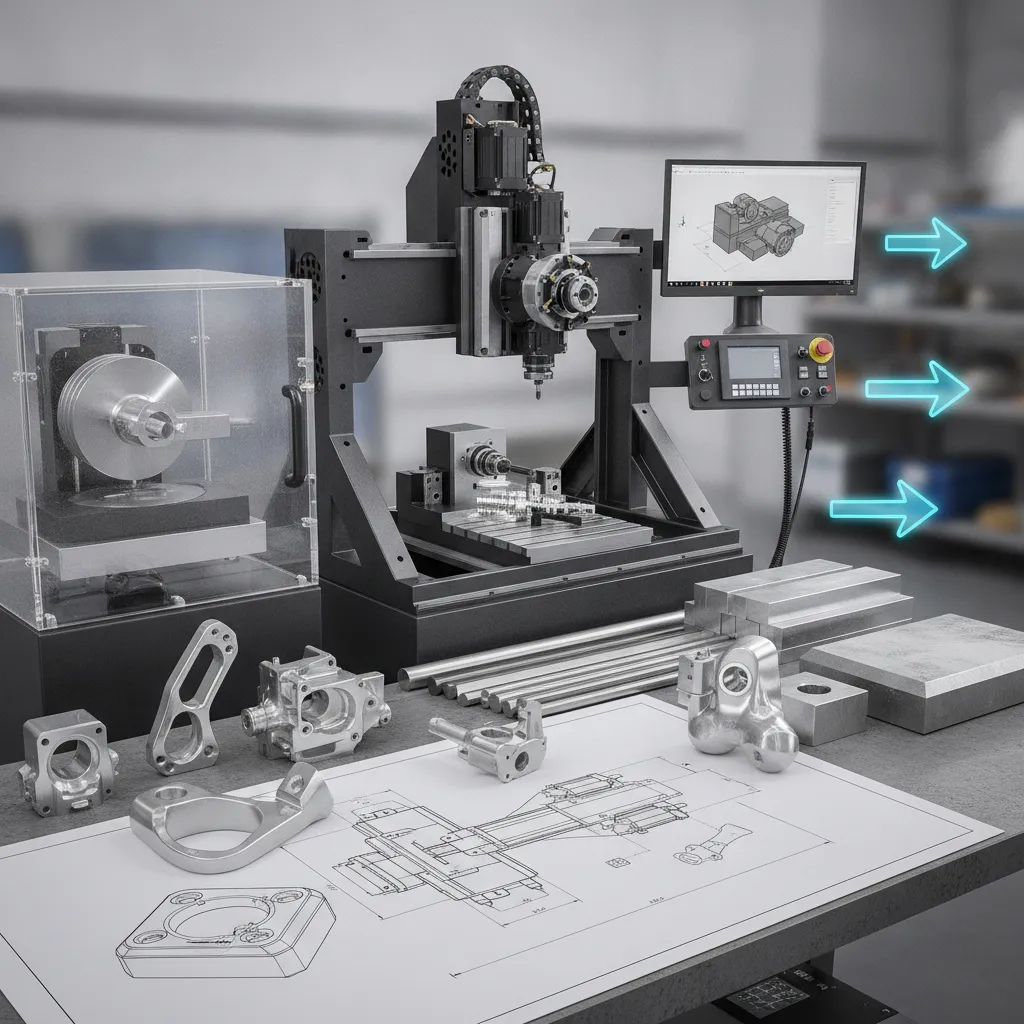
Choose Your Materials and Surface Finishes
Material selection determines part cost, lead time, and performance, pick the wrong alloy and no finish will save you.
For metals, 6061 aluminum is the default choice for custom CNC machining: it machines fast, holds tight tolerances, and costs less than steel. Use 304 or 316 stainless steel where corrosion resistance matters, such as marine or food-contact environments. Specify 4140 alloy steel for high-strength structural parts that face shock loads, and brass for electrical connectors or plumbing fittings where conductivity or thread durability is the priority.
Plastics cut per-unit cost by 30–50% compared to aluminum on average, making them worth evaluating for non-structural components. Delrin (POM) holds tight tolerances and runs with low friction, which suits bushings and sliding mechanisms. PEEK handles continuous service temperatures above 250 °C, making it the choice for aerospace and medical housings. UHMW-PE resists abrasion in conveyor and packaging applications, while nylon balances cost and moderate mechanical strength across general-purpose brackets and housings.
Titanium deserves special mention for applications where the strength-to-weight ratio is critical and weight savings justify higher machining costs. Grade 5 titanium (Ti-6Al-4V) is the most commonly machined titanium alloy, used extensively in aerospace structural components and orthopedic implants. It machines at roughly one-third the speed of 6061 aluminum and wears tooling significantly faster, which is why titanium parts command a substantial price premium. Always confirm that your supplier has experience with titanium before ordering, as improper speeds and feeds can cause work hardening and dimensional drift.
“Material selection is the single most consequential decision in any CNC machining project. Engineers who treat it as an afterthought consistently encounter cost overruns and performance failures that proper alloy selection would have prevented.” — John Hartmann, Senior Applications Engineer, American Machinist
Surface Finishes and Quality Certifications to Request
Each finish serves a specific function, and not every finish works on every material. As-machined surfaces leave a roughness of approximately Ra 125 µin, acceptable for functional internal parts. Bead blasting removes tool marks and produces a uniform matte texture. Anodize Type II builds a corrosion-resistant oxide layer on aluminum; Type III hardcoat adds wear resistance up to 70 Rockwell C surface hardness. Powder coat suits steel and aluminum for color and impact protection. Electroless nickel plating improves hardness and corrosion resistance on conductive base materials, it does not work on plastics.
On certifications: ISO 9001:2015 is the baseline quality management standard every supplier should hold. Aerospace buyers must require AS9100D certification. Defense programs involving controlled technical data require ITAR registration from the supplier, confirm this in writing before sharing drawings. For medical device components, confirm whether the supplier operates under ISO 13485, which governs quality management systems specific to medical device manufacturing and adds traceability requirements beyond standard ISO 9001.
Avoid These Common Mistakes When Ordering CNC Machined Parts
The five most costly errors in custom CNC machining are over-tolerancing, skipping DFM review, vague material specs, thin lead-time buffers, and no first-article inspection.
- Over-tolerancing the entire part. Specifying ±0.001″ across every feature, when only one bore or mating surface actually needs it, drives per-part cost up 2–3x. Apply tight tolerances only to functional surfaces; leave non-critical geometry at standard machining tolerances (typically ±0.005″ or looser).
- Skipping the DFM review. Going straight from CAD file to production without a design-for-manufacturability check is the leading cause of scrapped first runs. A 30-minute DFM conversation catches undercut features, thin walls, and inaccessible tool paths before any metal is cut.
- Ordering material by name, not grade. Requesting “stainless steel” without specifying 304, 316, or 17-4 PH leaves the grade selection to the supplier. Each grade carries different corrosion resistance, tensile strength, and machinability, wrong choice means wrong part performance.
- Underestimating real lead time. A quoted 2-day machining turnaround assumes same-day file approval. Factor in DFM review, finishing, and shipping, door-to-door time is typically 5–10 days. Build that buffer into your project schedule before committing to a launch date.
- Skipping first-article inspection (FAI) on production runs. For any order exceeding 25 units, request a formal FAI report before the full batch is cut. FAI catches systematic setup errors, a misaligned datum, an incorrect tool offset, that would otherwise repeat across every part in the run.
Compare Costs and Turnaround Times Across CNC Machining Providers
Custom CNC machining costs range from $50–$150 per unit for simple aluminum prototypes at qty 1, dropping 40–60% per unit at qty 50 as setup costs spread across the run.
Cost Per Unit for Different Order Volumes and Material Types
Three factors drive the final price: material (~20% of total cost), machining time including complexity and number of setups (~60%), and finishing operations (~20%). Machining time dominates because each additional setup, repositioning a part for a second or third axis, adds programming time and fixture cost.
Material and industry stack multiply that base price significantly. A titanium aerospace bracket produced in an AS9100D-certified shop runs 3–5x the cost of an equivalent 6061 aluminum automotive bracket. Titanium machines more slowly, wears tooling faster, and the certification audit trail adds overhead at every step.
Marketplace platforms like Xometry aggregate quotes from multiple shops, which can reduce cost, but introduces variability in process control and surface consistency. Dedicated shops charge a premium for consistency, which matters most when tolerances are tight or part geometry is complex. For rapid prototyping needs, platforms such as PCBWay’s CNC Machining Service offer competitive pricing on precision and rapid prototyping parts with online quoting, making them a practical option for engineers who need fast turnaround on smaller batches.
“The biggest mistake buyers make when comparing CNC machining quotes is focusing exclusively on unit price. Setup fees, finishing costs, and inspection documentation can easily double the apparent price difference between two suppliers.” — Lisa Ramsey, Director of Supply Chain Operations, Precision Parts Association
How Turnaround Times Compare Across Service Providers
Online instant-quote platforms, SendCutSend, Xometry, and Protolabs, advertise 2–7 day lead times for standard parts. That speed suits prototypes and low-complexity geometries where the DFM is already clean.
Traditional machine shops typically run 2–4 weeks but offer tighter process control for multi-setup parts, deep pockets, or thin-wall features that require manual intervention. If your part has a tolerance of ±0.001″ or requires post-machine inspection documentation, a dedicated shop’s longer lead time is usually worth the wait.
When evaluating quotes, ask each provider for their setup fee structure, minimum order quantity, and whether finishing operations are included in the quoted price or billed separately. Also confirm whether the quoted lead time begins from file approval or from order placement — this distinction can add one to two business days to your actual delivery window and is a common source of scheduling confusion.
Frequently Asked Questions
What is the minimum order quantity for custom CNC machined parts?
Most CNC machining suppliers accept orders starting at a single part, making the process viable for prototypes and one-off components. Many online services, including those offering instant quoting, allow you to order as few as one piece with no minimum. For production runs, pricing per unit typically drops at quantities of 10, 50, and 100 parts, so it pays to confirm volume pricing tiers with your supplier before committing to a design.
How tight are the tolerances for CNC machined parts, and what affects them?
Standard CNC machining holds tolerances of ±0.005 inches (0.127 mm) or better, though tighter tolerances are achievable with 5-axis equipment and careful fixturing. The main factors are material choice, part geometry, machine type, and surface finish. Aluminum and steel hold tight tolerances more reliably than softer plastics. Complex internal features, such as deep bores or thin walls, require slower feeds and additional setups, which can affect both tolerance and lead time.
Which industries use custom CNC machining most, and what parts do they produce?
Aerospace, medical devices, automotive, and electronics are the heaviest users of custom CNC machining. Aerospace shops machine structural brackets, housings, and turbine components to strict tolerances. Medical manufacturers produce surgical instruments, implant components, and diagnostic device housings. Automotive suppliers use CNC to cut engine blocks, transmission parts, and custom fixtures. Electronics manufacturers rely on CNC for heat sinks, enclosures, and connector bodies, often in aluminum, where dimensional accuracy directly affects assembly fit and thermal performance.
Can CNC machining handle both prototypes and full production runs?
Yes, CNC machining supports single prototypes and high-volume production runs on the same equipment, with no tooling changes required between jobs. This makes it one of the few processes where a prototype and its production counterpart are made identically, eliminating re-validation steps. Lead times for prototypes typically run 2–7 days, while larger production batches may require 2–4 weeks depending on part complexity and material availability.
How do I verify the quality and certifications of a custom CNC machining supplier?
Request copies of the supplier’s current ISO 9001:2015 certificate and, for aerospace or defense work, their AS9100D or ITAR registration documentation. Reputable suppliers provide these without hesitation. Ask whether they perform in-process inspection or only final inspection, and whether they can supply a Certificate of Conformance and material traceability documentation with each order. For critical applications, request a sample first-article inspection report from a previous job to evaluate the depth and format of their quality records before committing to a production run.
Conclusion
Custom CNC machining delivers repeatable precision, tolerances at or below ±0.005 inches, across materials from 6061 aluminum to engineering-grade plastics, with no tooling investment between a prototype and a production run. The decisions that matter most happen before the machine starts: material selection, tolerance specification, and surface finish choice each directly affect cost and lead time.
As a concrete next step, export your part file as a STEP or IGES file, add a 2D drawing that calls out your critical tolerances, and request a DFM review from your machining supplier before you approve the first article. That single step catches the majority of costly design issues before any material is cut.
Recommended Articles
Explore more from our content library:
- <a href="https://gcnov.com/cnc-machined-parts-materials-tolerances-costs/" title="Complete Guide to CNC Machining Parts Materials“>Complete Guide to CNC Machining Parts Materials
- What Sets High-Tolerance Precision Manufacturing Apart
- A Complete Guide to OEM Manufacturing for Product Companies
- Complete Guide to Automotive Fasteners Standards
- Complete Guide to Industrial Fasteners Types
