

Electroplating services deposit a thin metal layer onto a base material using an electric current, improving corrosion resistance, conductivity, hardness, or appearance. Providers plate metals like gold, nickel, chrome, silver, and copper onto parts for aerospace, medical, automotive, and electronics applications. Costs typically range from a few cents to several dollars per part depending on metal type, part geometry, and volume. Reputable providers hold ISO 9001, RoHS, and in some cases ITAR certifications.
What Electroplating Services Are and How the Process Works
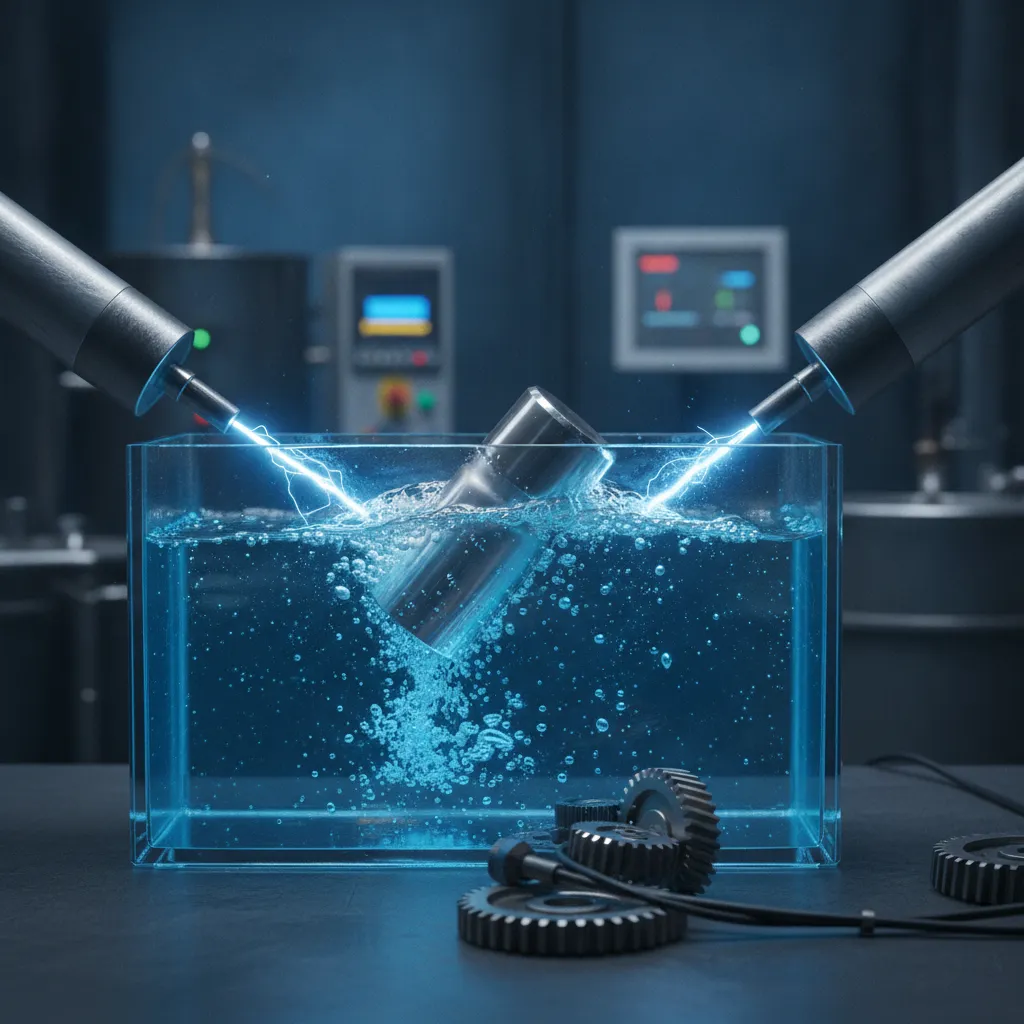
Electroplating bonds a metal layer to a base material by passing electric current through an electrolyte bath, coating thickness typically runs 0.1 to 25 microns depending on application. According to Xometry’s electroplating services team, selecting the right process parameters from the outset is critical to achieving consistent deposit quality at scale.
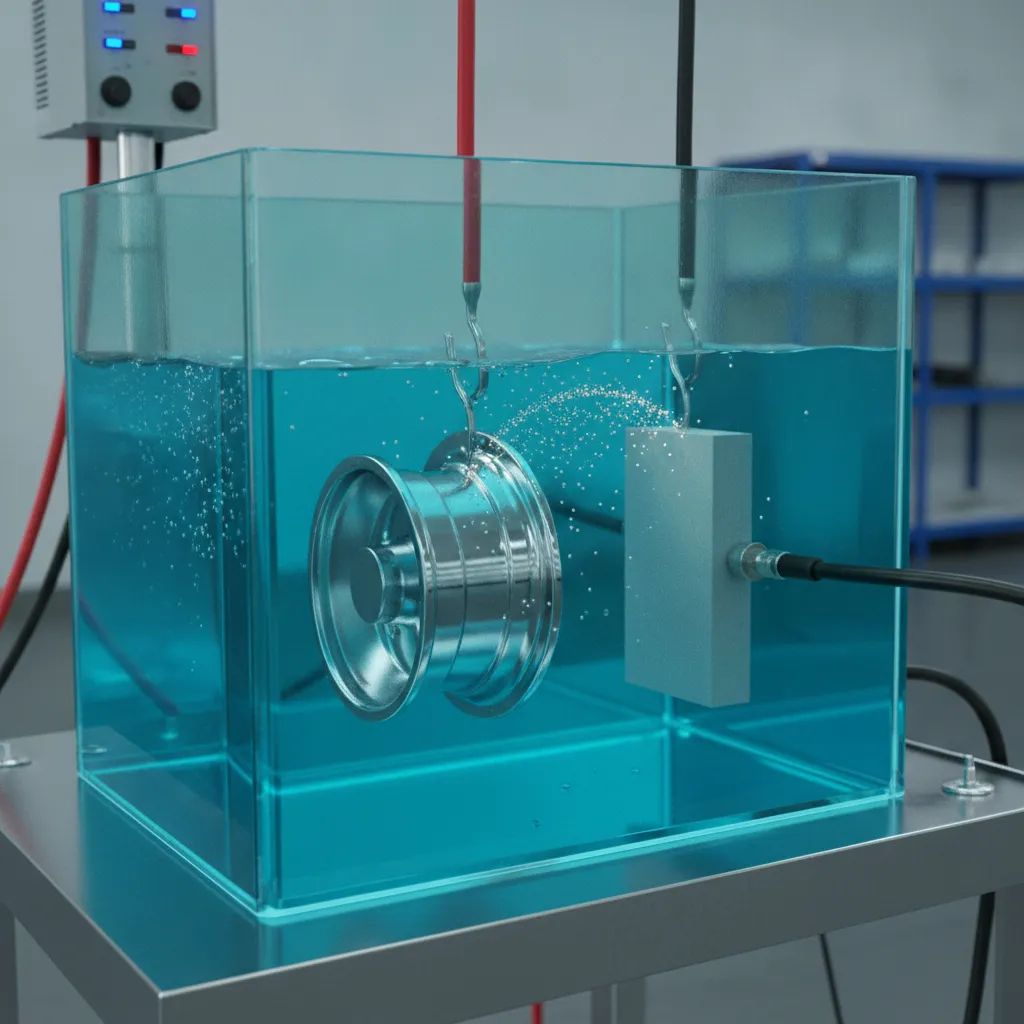
The workpiece acts as the cathode and is submerged in a solution containing dissolved metal ions. Current drives those ions out of solution and onto the part’s surface, building up a controlled deposit layer by layer. The anode is usually made of the same metal being deposited, replenishing the ion concentration as plating progresses.
Professional electroplating services follow five sequential stages to ensure deposit quality and adhesion:
- Cleaning and surface preparation, mechanical or chemical removal of oxides, oils, and contaminants that would prevent adhesion
- Racking or barrel loading, fixtures hold individual parts (rack) or tumble small bulk parts (barrel) for consistent bath exposure
- Plating bath immersion, the part is submerged in the electrolyte solution under controlled current density, temperature, and time
- Rinsing, multi-stage rinses remove residual chemistry and prevent cross-contamination between process tanks
- Post-treatment, passivation, baking, or topcoat application depending on substrate and end-use specification
“Surface preparation is the most underestimated step in any plating operation. A deposit is only as good as the substrate it bonds to — contamination at the micron level will cause adhesion failure at the macro level.” — Dr. Maria Schlesinger, Professor of Electrochemical Engineering, Wayne State University
Key Benefits and Limitations of Electroplating
Electroplating delivers four measurable outcomes: corrosion resistance tested to 1,000+ hours in salt-spray chambers, improved electrical conductivity on copper and gold deposits, increased surface hardness (hard chrome can reach 70 HRC), and cosmetic finishing for consumer-facing parts.
The limitations are equally concrete. Thin coatings cannot restore severely worn substrates, if the base metal is dimensionally out of spec, plating won’t fix it. High-strength steels above 40 HRC face hydrogen embrittlement risk; baking must begin within 4 hours post-plate to drive out absorbed hydrogen before it causes delayed fracture. Complex geometries create uneven deposit distribution because recessed areas receive lower current density, a phenomenon known as the Faraday cage effect.
Typical Turnaround Times and SLA Expectations
Standard production jobs run 5–10 business days from receipt of clean, dimensionally acceptable parts. Expedited processing compresses that window to 2–3 business days, usually at a 25–50% cost premium.
SLA guarantees vary by provider certification level. ISO 9001-certified shops commit to documented process controls and traceability records, which gives buyers a contractual basis for rejecting non-conforming lots. Shops without third-party certification typically offer best-effort lead times with no formal recourse, a meaningful distinction when you’re sourcing for aerospace or medical programs with hard delivery dates. Facilities like Plating Tech Miami demonstrate how certified providers structure their quality commitments to support demanding production schedules.
Electroplating Methods and Materials: Gold, Nickel, Chrome, and More
The right electroplating method depends on part size, geometry, deposit location, and budget, gold suits contacts, nickel suits wear surfaces, chrome suits tooling.
Three core application methods define most electroplating services: rack plating, barrel plating, and selective (brush) plating. Rack plating holds individual parts on fixtures, making it ideal for large or delicate components where tolerances must stay within ±0.0001 in. Barrel plating tumbles small parts, fasteners, stampings, terminals, together in a rotating drum, cutting cost per piece significantly for high-volume runs. Brush plating applies deposit to a localized area using a handheld tool, which makes it the standard choice for in-field repairs or situations where only one section of a part needs coverage.
“The choice between rack and barrel electroplating services is not just about part size — it is fundamentally a decision about deposit uniformity versus throughput economics. Engineers who conflate the two end up over-specifying their process and paying for it.” — James Watkowski, Senior Process Engineer, American Electroplaters and Surface Finishers Society
Gold vs. Nickel vs. Chrome: Performance and Cost Compared
Gold plating delivers the best electrical conductivity and oxidation resistance of any common deposit. Typical thickness runs 0.05–2.5 microns, and cost lands at $5–$50+ per part for small connectors, PCB contacts and medical implants are the primary end markets.
Nickel is the workhorse option. Electroless nickel produces a uniform deposit on complex geometries at ±0.0001 in., which barrel or rack processes cannot match on irregular surfaces. Pricing runs $0.50–$5 per part at mid-volume, making it the default for automotive and hydraulic components.
Hard chrome (0.001–0.010 in. thick) targets wear resistance on industrial tooling and hydraulic rods. Decorative chrome is far thinner, roughly 0.00001 in. applied over a nickel undercoat, and exists purely for appearance. Hard chrome faces real regulatory pressure: the EU REACH regulation restricted hexavalent chromium (Cr VI) use starting in 2017, pushing many manufacturers toward trivalent chrome or alternative coatings. The EPA’s metal finishing effluent guidelines provide the regulatory framework that governs how electroplating services must manage and dispose of chromium-bearing process waste.
Composite plating adds a second dimension. Nickel-PTFE co-deposits reduce friction coefficient to approximately 0.05, which makes the coating standard in mold-release tooling and food-processing equipment. Nickel-SiC increases surface hardness for abrasive environments. Both composite options typically carry minimum order quantities of 50–100 pieces because bath preparation costs are higher.
Minimum Order Quantities and Volume Discounts
Barrel plating offers the steepest per-piece cost drop at volume, a run of 10,000 fasteners can cost a fraction of the same parts processed individually on a rack. Composite and gold plating carry the highest base costs and the least flexibility on minimums. Buyers sourcing low volumes of gold-plated PCB connectors or composite-coated mold components should request a setup-fee breakdown separately from the per-piece rate to compare suppliers accurately. When evaluating electroplating services for high-mix, low-volume programs, always ask whether the provider offers prototype pricing tiers distinct from production rates.
How Much Electroplating Services Cost and What Drives Pricing
Electroplating services cost anywhere from a few cents to several dollars per part, depending on metal type, coating thickness, part geometry, and order volume.
Metal choice is the single largest cost variable. Gold plating runs 5–20x more per square inch than nickel for equivalent surface area, because the price tracks gold’s spot market directly. Silver and palladium sit between those extremes. Nickel and copper remain the most economical base options for high-volume production runs.
Part geometry adds measurable cost on top of metal. Blind holes, recesses, and high-aspect-ratio features require specialized racking setups, longer bath immersion times, or auxiliary anodes to achieve uniform coverage. Expect a 15–30% geometry surcharge on complex parts compared to flat stampings of the same surface area.
Coating thickness scales cost in a near-linear relationship. Doubling deposit thickness from 5 to 10 microns roughly doubles both metal consumption and bath time, two of the three largest cost inputs in any plating operation. Specify only the minimum thickness your application requires. Comparing quotes across multiple electroplating services providers on a normalized cost-per-square-inch basis, rather than per-piece, is the most reliable way to identify pricing outliers.
Volume Discounts and Blanket Order Pricing
Most electroplating providers offer 10–15% off at 500+ pieces and 20–30% off at 5,000+ pieces. Annual blanket orders above $50K typically enable fixed-rate pricing with scheduled release windows, a structure that protects you from metal spot-price swings. Always request a tiered pricing sheet before accepting a per-piece quote.
How Rush Turnaround Guarantees Affect Your Quote
Compressing lead time from a standard 7–10 days down to 2–3 days typically carries a 25–50% rush premium. Some providers operate dedicated express lines and back those slots with penalty-clause SLAs, meaning they pay you if they miss the date. That guarantee is worth asking about explicitly when comparing quotes, because it converts a soft promise into a contractual commitment.
Industries That Use Electroplating and Real-World Application Examples
Electroplating services deliver measurable performance gains across aerospace, medical, automotive, and electronics manufacturing—each with distinct coating specs and compliance requirements.
Aerospace and Medical: Before and After Electroplating
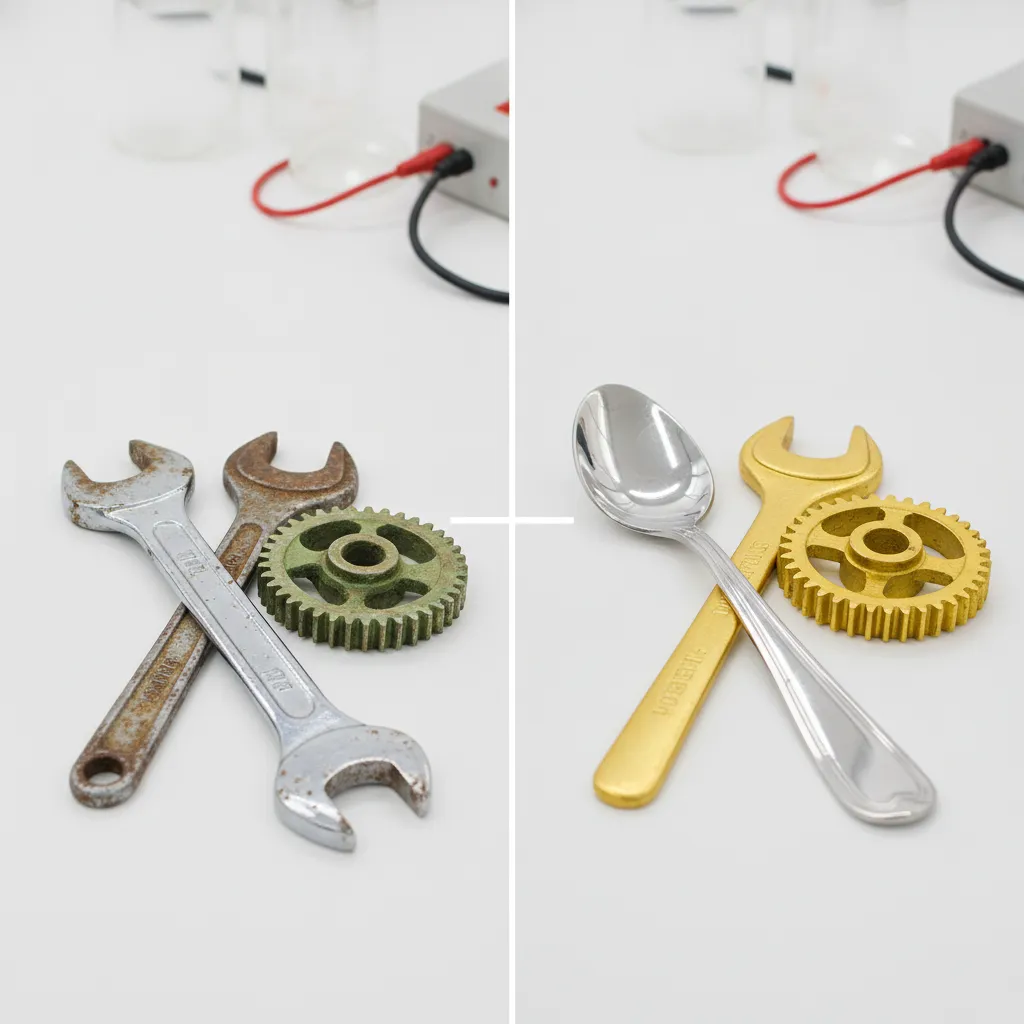
In aerospace, hard chrome on landing gear actuator rods extends service life from roughly 2,000 to 10,000+ flight cycles—a five-fold improvement driven by surface hardness exceeding 900 HV. Gold plating on avionics connectors holds contact resistance below 10 milliohms across a temperature range of -65°C to +200°C. Both applications must meet MIL-STD-1500 and AMS 2400 specifications, which require full lot certification, first-article inspection reports, and complete material traceability.
Medical device manufacturers rely on electroless nickel or gold coatings on surgical instruments and implantable components to achieve biocompatibility and sterilization resistance. FDA 21 CFR Part 820 compliance is mandatory, and coating thickness must be validated against ISO 10993 biocompatibility standards. A supplier that cannot provide documented validation data is not a viable option for this tier. Electroplating services operating in the medical space must also maintain complete material traceability records to satisfy FDA audit requirements.
“In regulated industries, the documentation behind an electroplating process is as important as the deposit itself. Traceability from raw chemistry to finished part is what separates a compliant supplier from a liability.” — Dr. Susan Okonkwo, Quality Systems Director, Medical Device Manufacturers Association
Automotive and Electronics Applications
Nickel-chrome on decorative automotive trim must survive 240-hour ASTM B117 salt-spray testing without base-metal corrosion. Electroless nickel on fuel injector bodies improves wear resistance and reduces friction—documented OEM case studies show warranty claims dropping 18–25% after the switch.
In electronics, ENIG (Electroless Nickel Immersion Gold) is the industry standard for PCB edge connectors, delivering solderability and a shelf life of up to 12 months. Copper plating fills through-holes in multilayer boards to IPC-6012 Class 3 standards, which govern the most demanding military and aerospace PCB applications. According to Xometry’s electroplating services resource, ENIG remains the most specified finish for high-reliability PCB assemblies due to its combination of flat surface geometry and long shelf life.
Commercial and consumer applications may accept visual inspection only—but aerospace and medical buyers should specify full traceability requirements upfront. Assuming a plating shop operates at your compliance tier without confirming it is one of the most common and costly sourcing mistakes.
Certifications and Compliance Standards Your Electroplating Provider Should Hold
A qualified electroplating services provider holds ISO 9001:2015, NADCAP, and RoHS compliance at minimum, missing any one of these signals real production risk.
ISO 9001, RoHS, and ITAR: What Each Certification Actually Means
ISO 9001:2015 is the baseline. It mandates documented process controls, corrective action systems, and customer satisfaction tracking. Any provider without it introduces unacceptable variability for production-critical parts.
ITAR registration is non-negotiable for aerospace and defense buyers. If your parts appear on the U.S. Munitions List, your plater must hold a valid ITAR registration number, verify it directly in the DDTC database before sharing any drawings or specifications.
RoHS compliance restricts hexavalent chromium, lead, cadmium, and mercury in plated finishes sold into the EU. Non-compliant parts can be seized at customs. Require your provider to issue RoHS declarations of conformity tested per IEC 62321, not just a self-declaration letter.
NADCAP accreditation for chemical processing is the gold standard for aerospace supply chains. NADCAP-accredited platers undergo third-party audits every 12–18 months and appear in the publicly searchable OASIS database. If your customer is a Tier 1 aerospace OEM, NADCAP is typically mandatory, not optional. Evaluating electroplating services against this checklist before issuing a purchase order eliminates the most common qualification failures.
Environmental and Wastewater Compliance Requirements
Environmental compliance varies by state and carries direct liability for buyers. EPA 40 CFR Part 413 governs wastewater discharge from plating operations, violations can disrupt your supplier’s operating permit and halt your production runs mid-order. California’s Title 22 imposes additional restrictions on top of federal requirements.
Providers operating zero-discharge or closed-loop water systems reduce your supply chain environmental liability and increasingly satisfy Tier 1 OEM supplier codes that now require documented environmental controls. Ask for the facility’s most recent wastewater discharge permit before approving a new supplier.
- ISO 9001:2015, request the certificate number and expiry date; confirm via the issuing registrar’s public database
- ITAR registration, verify the registration number in the DDTC database at pmddtc.state.gov
- RoHS declaration of conformity, require IEC 62321 test reports, not self-attestation alone
- NADCAP accreditation, search the OASIS database at eauditnet.com for current accreditation status
- Wastewater permit, request the current EPA 40 CFR Part 413 or state-equivalent discharge permit
Frequently Asked Questions
What is the minimum order quantity for electroplating services?
Minimum order quantities vary by provider and process, many job shops accept single-piece prototype runs, while high-volume barrel plating operations often require batches of 500 or more parts. Rack plating and precision gold plating jobs are commonly quoted per piece, making them accessible for small runs. Your best approach is to request a quote with your exact part count, material, and coating spec, since MOQ is rarely fixed across all plating types.
How long does electroplating last before it wears off?
Plating longevity depends on coating thickness, base metal, and the environment the part operates in, a hard chrome layer at 0.001 inches can last decades in industrial use, while decorative gold plating at 0.0001 inches may show wear within months of daily contact. Specifying the correct deposit thickness for your application is the single most important factor. Ask your plating provider for a thickness recommendation based on your wear and corrosion requirements.
Can electroplating be applied to non-conductive materials like plastic?
Yes, plastic and other non-conductive substrates can be electroplated after a conductive layer is applied through a chemical pre-treatment process, typically electroless copper or nickel. ABS plastic is the most commonly plated non-metal, widely used in automotive trim and consumer electronics housings. The pre-treatment adds cost and processing time, so confirm with your supplier that they have experience plating your specific substrate.
What is the difference between electroplating and electroless plating?
Electroplating uses an electric current to deposit metal ions onto a conductive substrate, while electroless plating relies on a chemical reduction reaction, no external current required. Electroless nickel, for example, deposits at a uniform thickness across complex geometries, including internal bores and recessed features that rack or barrel plating struggles to reach evenly. Electroplating generally offers a wider choice of metals and faster deposition rates; electroless plating wins on uniformity and coverage of complex shapes.
How do I verify that an electroplating services provider meets my industry’s compliance requirements?
Start by requesting copies of the provider’s current ISO 9001:2015 certificate, NADCAP accreditation (if aerospace applies), and any relevant RoHS or ITAR documentation. Cross-check ISO certificates against the issuing registrar’s public database and verify NADCAP status in the OASIS system at eauditnet.com. For medical programs, ask for FDA 21 CFR Part 820 compliance records and ISO 10993 validation data. Electroplating services providers operating at production-tier compliance levels will supply this documentation without hesitation — reluctance to share it is itself a disqualifying signal.
Conclusion
Choosing the right electroplating process comes down to three decisions: the coating metal that matches your functional requirements (corrosion resistance, conductivity, hardness), the plating method that fits your part geometry and batch size, and a supplier with the process controls, bath chemistry monitoring, thickness verification, and documented quality standards, to deliver consistent results across production runs.
If you are sourcing electroplating services alongside CNC machining, sheet metal fabrication, or cold forging, consolidating those processes with a single manufacturing partner reduces tolerance stack-up risk and cuts lead time. Request a quote with your part drawing, target coating spec, and annual volume, that combination gives any qualified supplier what they need to return an accurate price and lead time on the first pass. Providers offering integrated electroplating services within a broader manufacturing platform can often compress total program lead time by 20–30% compared to managing separate vendors for each process step.
Recommended Articles
Explore more from our content library:
- What to Look for When Choosing Custom CNC Machining Services
- Complete Guide to CNC Machining Parts Materials
- <a href="https://gcnov.com/precision-manufacturing-what-sets-high-tolerance-shops-apart/" title="What Sets High-Tolerance Precision Manufacturing Apart”>What Sets High-Tolerance Precision Manufacturing Apart
- A Complete Guide to OEM Manufacturing for Product Companies
- <a href="https://gcnov.com/automotive-fasteners-standards-materials-sourcing/" title="Complete Guide to Automotive Fasteners Standards”>Complete Guide to Automotive Fasteners Standards
